November 2025
Board Members on Board: Interview with Reverend T. Leon Preston

1. As someone whose life is deeply rooted in service, what drives your commitment to equitable transportation, and how does that influence your role on the METRO Board as we prioritize neighborhood-level improvements under METRONow?
My commitment to equitable transportation is rooted in a lifelong calling to serve and uplift communities historically marginalized or underserved and very diverse. Having been a rider of METRO since childhood, I understand firsthand that public transit is not merely a convenience—it is a lifeline. My pastoral and civic leadership have taught me that equity begins not with abstract policy but with understanding people’s lived realities. On the METRO Board, I approach each decision through the lens of necessity versus convenience, discerning the needs of transit-dependent communities while also enhancing service for choice riders.
Under METRONow, this translates to advocating for improvements that are not just comprehensive but also responsive to neighborhood-specific contexts—be it bus stop accessibility, transit frequency, or connectivity to employment and healthcare. My role is to ensure that our vision for transit is as inclusive as it is ambitious.
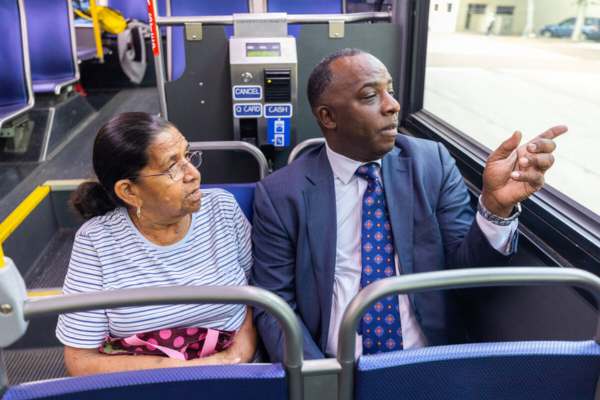
2. METRONow includes investments in a more modern, reliable fleet, which is key to improving on-time performance and the rider experience. How do you see these upgrades making a difference for the communities that rely on METRO every day?
A modern and reliable fleet represents more than technological advancement; it embodies respect for the time, dignity, and safety of every rider. Communities that rely daily on METRO—often working families, seniors, and students—deserve a system that honors their schedules and well-being. These upgrades are tangible investments in their quality of life. Reduced wait times, cleaner interiors, quieter rides, and better air quality through electric or low-emission vehicles all contribute to a dignified, dependable transit experience. More importantly, these improvements foster a sense of reliability and confidence in public infrastructure, which is essential for increasing ridership, economic participation, and overall civic engagement.
3. For many in Houston's workforce, especially those working early or late hour shifts, safety and reliability are essential. How is METRO addressing concerns around safety to ensure people can get to and from work with assurance?
Safety is non-negotiable—it is foundational to any transportation system that aims to serve the public with integrity. METRO has made significant strides in enhancing safety through expanded lighting at transit centers, surveillance technologies, community policing partnerships, and real-time alerts. We are also investing in personnel training that prioritizes not only incident response but also prevention and rider engagement. Importantly, METRO recognizes that safety includes both perception and reality, and we are actively working to ensure that every rider feels seen, heard, and protected. For shift workers commuting during early or late hours, these efforts translate into peace of mind—a necessary condition for economic stability and daily well-being.
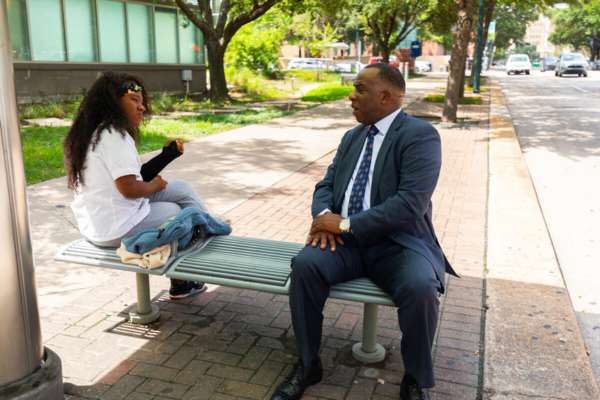
4. METRONowemphasizes a cleaner, safer, and more reliable system. What is your vision for how METRO can continue building trust among riders while expanding safe and affordable options for all Houstonians?
Building trust is a process rooted in consistency, communication, and care. My vision for METRO involves deepening our covenant with the public by not only delivering service excellence but also embodying transparency and accountability. This means keeping our promises—whether it’s timely arrivals, clearly communicated detours, or equitable service distribution across zip codes. It also means expanding affordability through fare policies that consider household burdens, while investing in first- and last-mile solutions to ensure no neighborhood is isolated. By prioritizing sustainability, METRO can also lead by example in environmental stewardship, which is increasingly important to the next generation of Houstonians. Ultimately, I see METRO as more than a transit system—it’s a bridge to opportunity, and our duty is to ensure that every rider can cross that bridge safely, affordably, and with dignity.

 Google Chrome
 Safari Mac OS
 Mozilla
 Microsoft Edge